DGHM Lecture 2025
Title: “Human coronaviruses: predicting the future by looking at the past”
Lia van der Hoek, Amsterdam, NL
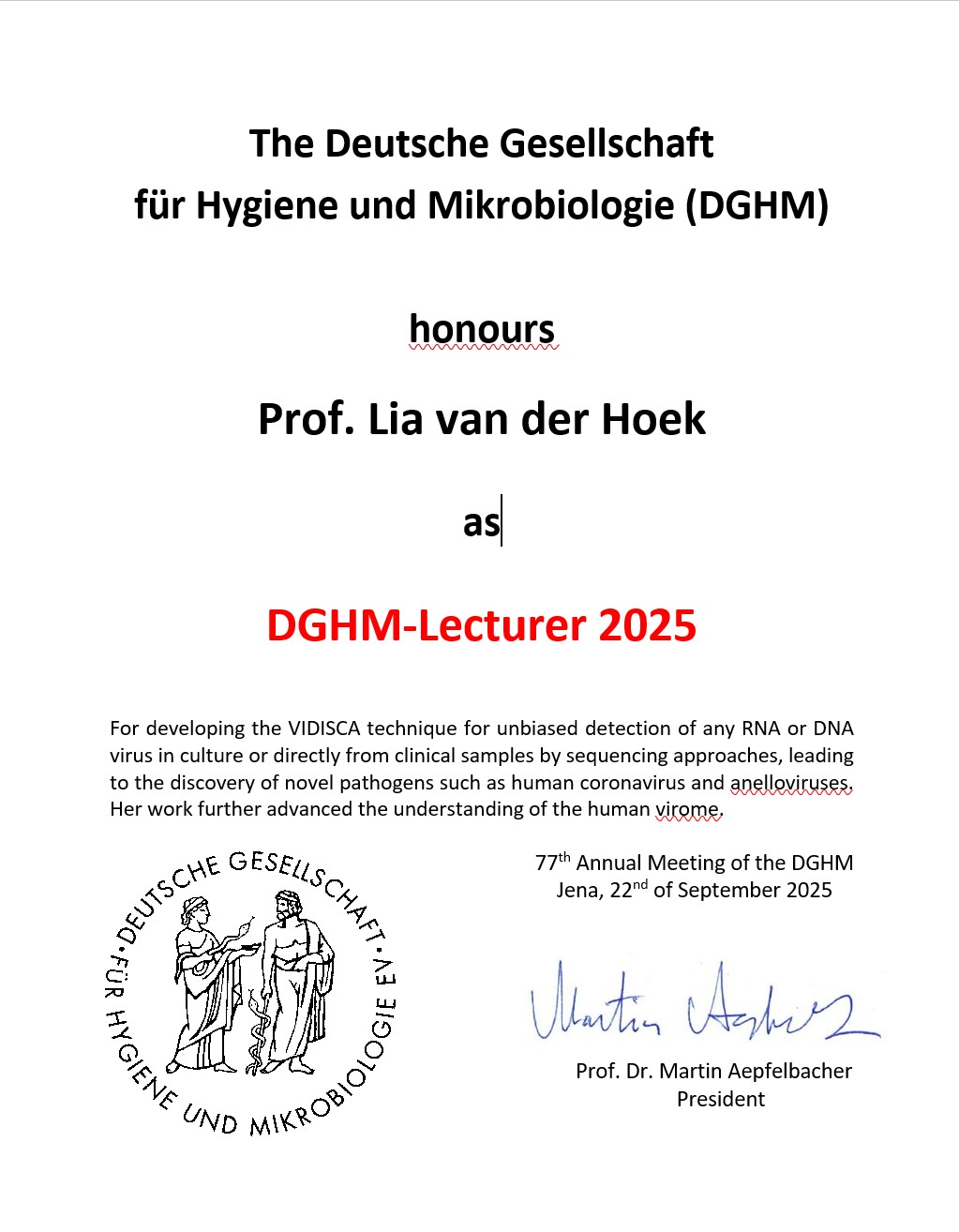
The DGHM honours Prof. Lia van der Hoek as DGHM-Lecturer 2025
For developing the VIDISCA technique for unbiased detection of any RNA or DNA virus in culture or directly from clinical samples by sequencing approaches, leading to the discovery of novel pathogens such as human coronavirus and anelloviruses. Her work further advanced the understanding of the human virome.
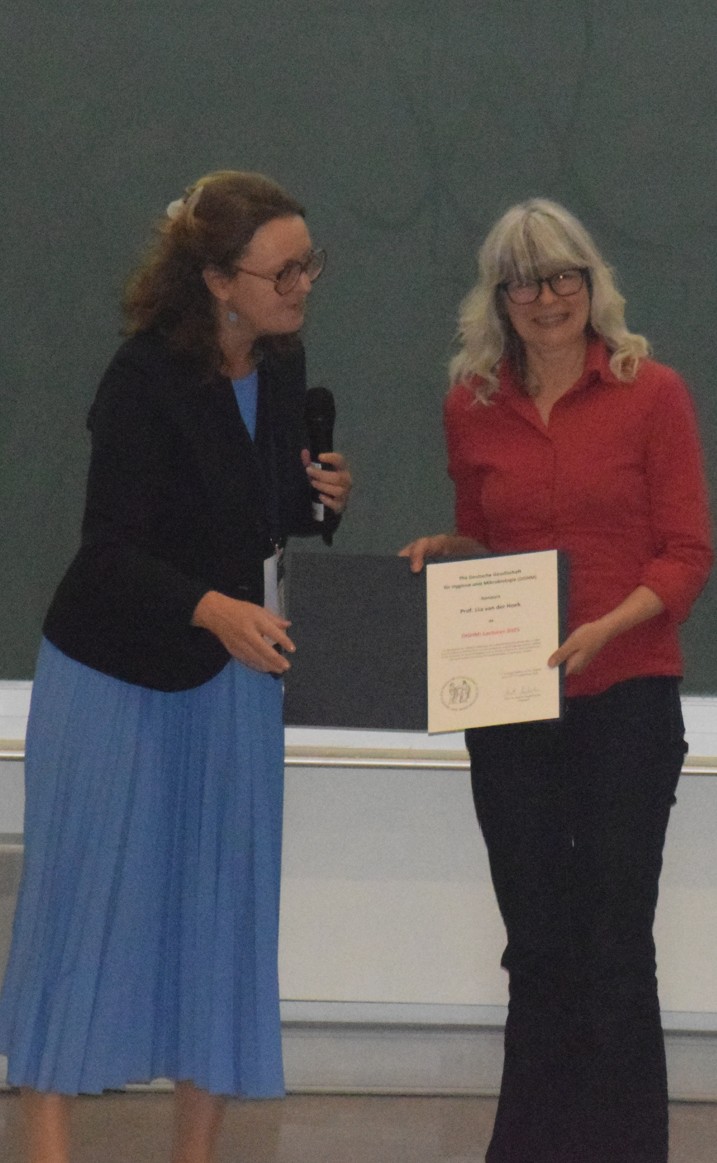
S. Deinhardt-Emmer, Lia van der Hoek (rechts)
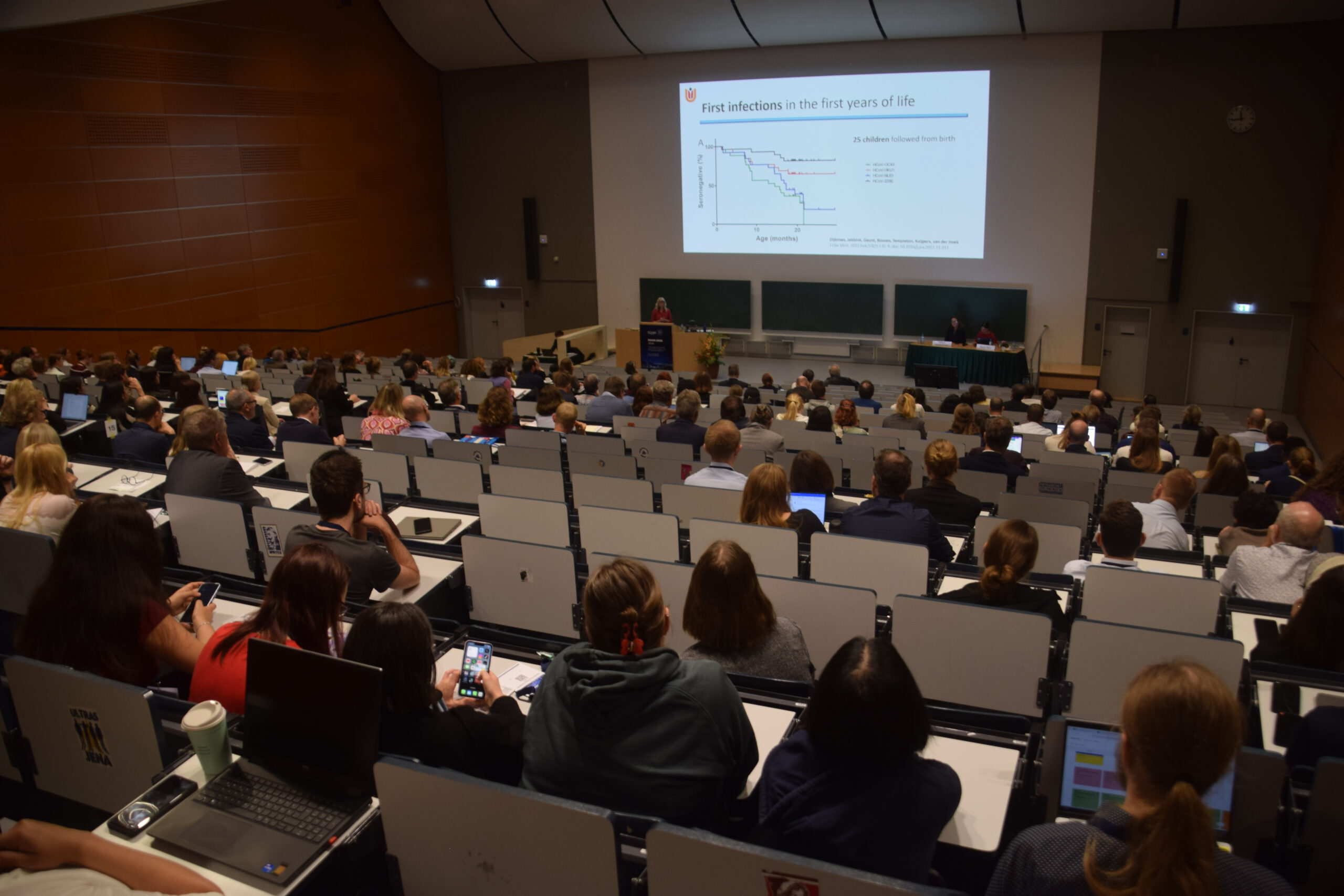
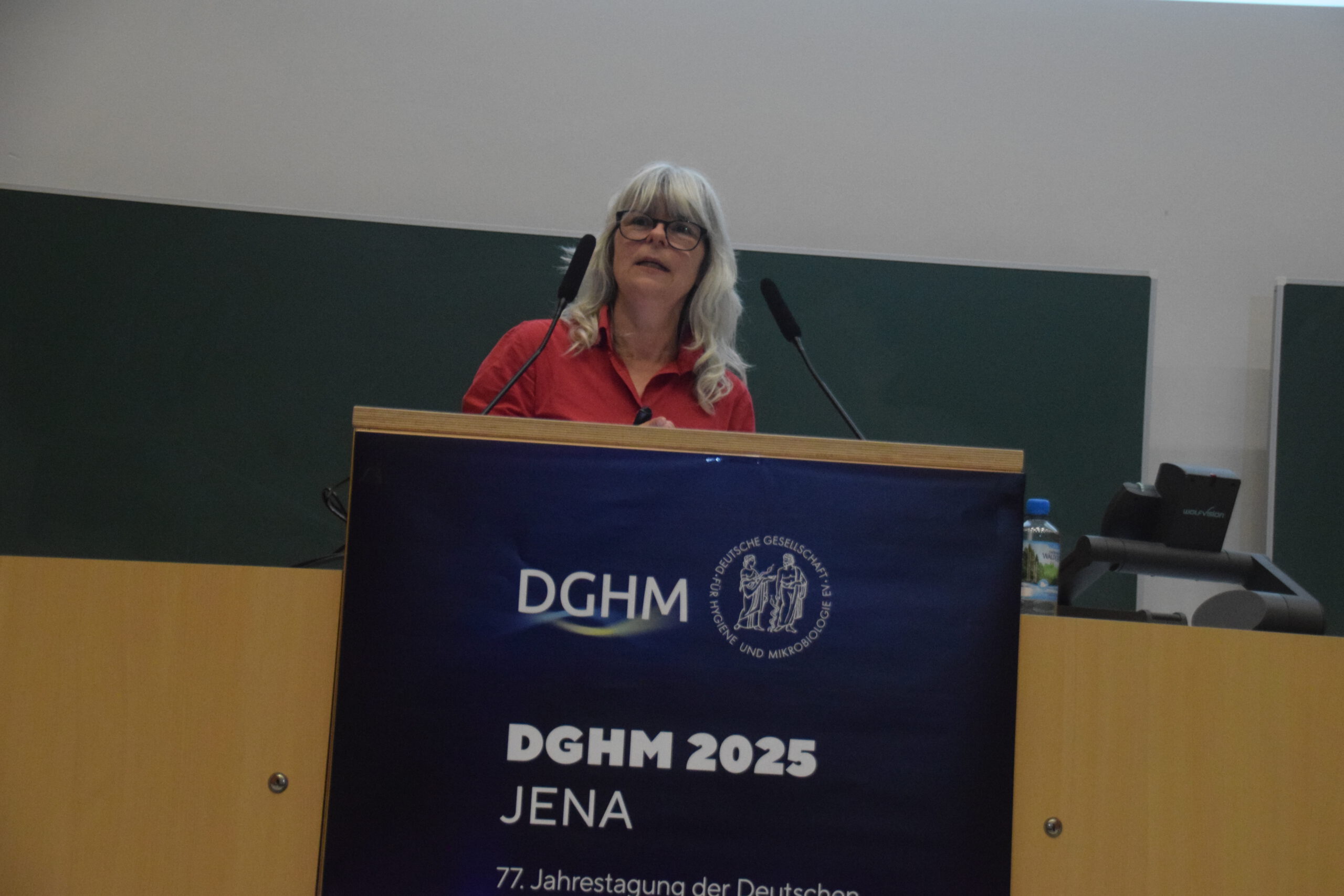
Lia van der Hoek did her PhD in HIV-research (1998). In 2006 she was appointed as Associate Professor at the Academic Medical Center of the University of Amsterdam (Amsterdam UMC). She developed her own method to find new viruses (VIDISCA) when NGS techniques were not available yet, and identified several unknown pathogens among which a human coronavirus (HCoV-NL63) in 2003. HCoV-NL63 is an endemic human coronavirus that remained unrecognized till then. Lia van der Hoek next contributed to finding the receptor of the virus (ACE2), showed first infections occurring during early childhood with continuous reinfections throughout life. Besides the research on HCoV-NL63 and the other endemic human coronaviruses, Lia van der Hoek continued with virus discovery and found other previously unknown human and animal viruses associated with unexplained diseases. For three of these novel viruses fulfilment of the Koch’s postulates was achieved. The unbiased identification of viruses allows not only the detection of unknown viruses but also the description of the full virome. An example of the virome research of Lia van der Hoek is the investigation of anelloviruses. These viruses are omnipresent – with chronic systemic infection of probably every individual – and currently in the limelight as marker for balanced immunosuppressive therapy after solid organ transplantation. Lia van der Hoek introduced the term “anellome”, studied antiviral activity controlling these viruses, the stability of the anellome in adults, and dynamics of anelloviruses under secondary infections. Lia van der Hoek has received several prizes among which the Heine Medin award in 2007.